The Investor Rights Test Every VC Firm Should Run Before Q4

Three questions to answer before valuations, LP reporting, follow-on decisions, and audit readiness all depend on the same rights data
Contracts define the rules your business runs on — and for a venture firm, some of the most consequential rules aren't in your cap table. They're in the LPAs and side letters everyone stops looking at once the round closes.
Summer is the right time to find the gaps, before year-end pressure hits.
It's July. That puts most VC firms squarely in Q3: the window before valuation support, LP updates, follow-on decisions, year-end close, and reporting requirements all move at once. By the time those pressures converge, it's much harder to find gaps in how investor rights are tracked, interpreted, and applied across the firm.
Q3 gives venture teams a rare chance to step back and ask a practical question:
Are our investor rights actually decision-ready?
Not just documented. Not just stored in a cap table tool. Not just summarized once in a spreadsheet.
Decision-ready means the team can quickly answer:
- What rights apply?
- What approvals are required?
- What obligations are active?
- What changed?
- Which agreements support the answer?
For COOs, CFOs, and legal leads, the issue isn't whether the agreements exist — it's whether anyone can answer those questions fast, on demand, without reconstructing the trail from scratch. For investment partners, it's sharper still: a rights gap isn't administrative, it's a competitive liability. If you can't prove what you're entitled to when a round moves, you lose the leverage you negotiated for.
The real risk isn't storage. It's lost leverage.
Investor rights increasingly shape how venture firms operate. Reporting obligations, information-sharing rights, follow-on decisions, consent rights, board observer rights, pro-rata participation, major investor status, and governance processes all influence how quickly and confidently firms can act.
When those rights are clear, current, and source-backed, teams move with confidence. When they're scattered across agreements, trackers, exports, inboxes, and institutional memory, year-end close gets harder than it needs to be.
LPAs and side letters are more than compliance paperwork — they're the ledger of the firm's earned entitlements. When rights like pro-rata participation, board appointments, or consent thresholds get disconnected from daily operations, the firm isn't just risking a messy audit. It's risking the unintentional surrender of its own leverage.
Whether consent is required before a financing. Whether pro-rata still applies. Whether a side letter changes the answer. Whether an amendment updated a prior threshold. Each of these can depend on multiple documents, different versions, and investor-specific provisions — which is exactly where cap-table tools and manual trackers break down. They were built to show ownership, not the rights that come with it.
A document shows what was signed. A cap table shows who owns what. A spreadsheet shows what someone extracted at a point in time. None of them tell you what governs today.
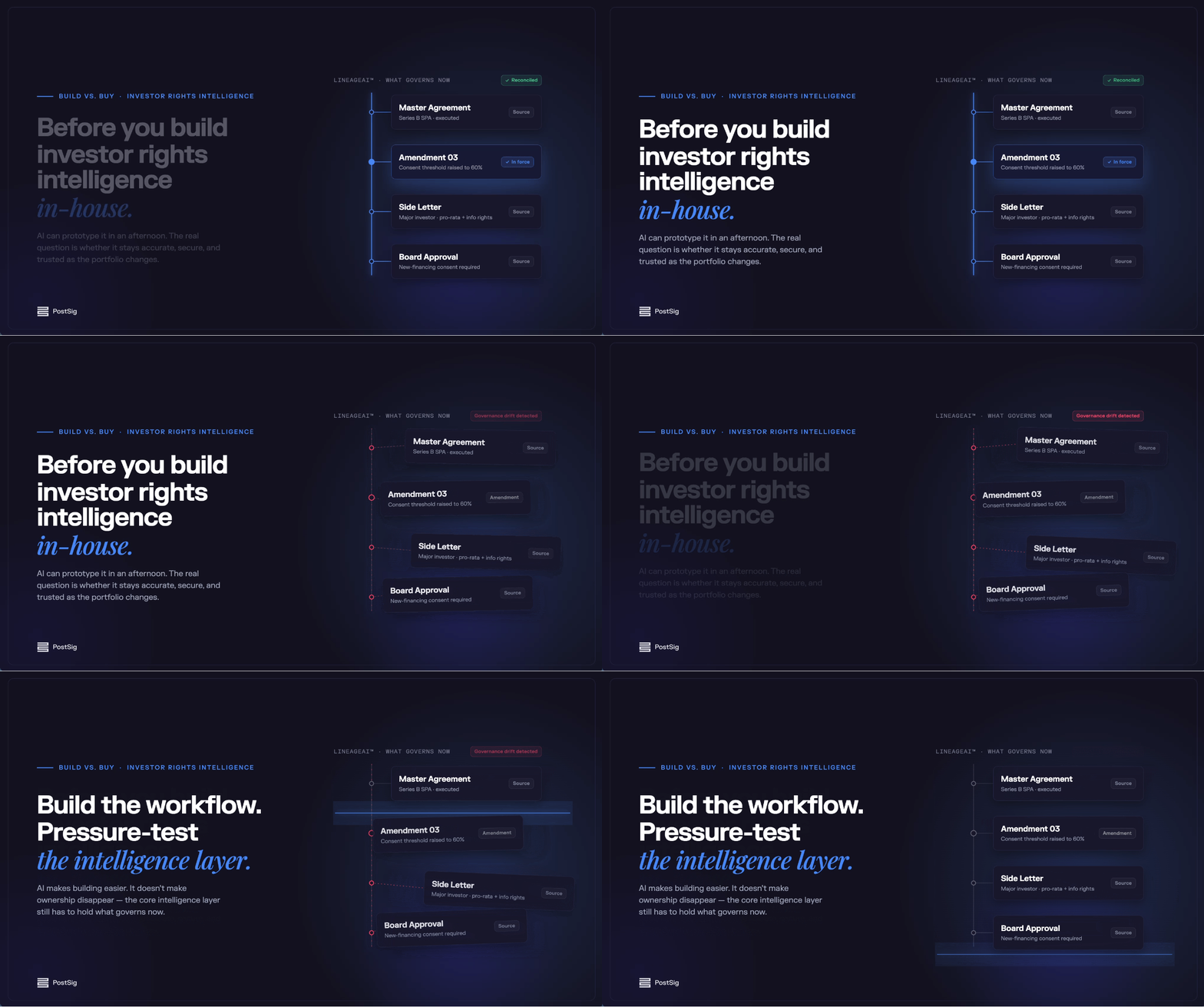
That's the gap firms hit when they outgrow spreadsheet-based rights tracking — and it's sharper now than it was a year ago. Aumni, the tool many firms leaned on for ownership data, is gone. JPMorgan wound it down. Firms that built workarounds on top of it aren't just short on live, traceable rights data anymore; they no longer have even a partial solution to build around. PostSig Investor Rights Intelligence closes that gap — connecting agreements, amendments, side letters, financing documents, and investor-specific provisions into a current, traceable view of what governs now, powered by LineageAI™..png)
This matters long after a deal closes. Information rights, pro-rata rights, consent rights, board observer rights, and reporting obligations keep shaping what can be shared, who needs to approve a decision, and how fast a team can respond to LPs, auditors, and portfolio companies. A right negotiated at the term sheet stage loses its practical value the moment the firm can't see whether it still applies after the latest financing, amendment, or ownership change.
And these gaps rarely announce themselves. They drift:
- A side letter lives in one person's memory.
- A consent threshold changes, but the tracker doesn't.
- A board observer right depends on major investor status, but ownership has shifted.
- A reporting obligation applies to a specific investor, but the operating team doesn't see it before an LP request comes in.
Nothing looks broken until the firm needs an answer fast — during year-end close, an LP request, a financing, or a governance decision already in motion. And then again when the Q1 audit depends on that same year-end record.
By Q4, a rights gap is no longer a cleanup item. It can slow an LP response, delay a financing decision, increase outside counsel dependency, weaken confidence in the firm's governance process, and create avoidable audit friction right behind it. Q3 is a far better time to find it.
Three questions to ask before Q4
1. Can we see which investor rights govern now?
A signed agreement shows what was agreed at a point in time. Portfolios don't stay still — new rounds happen, ownership changes, amendments modify prior terms, side letters create investor-specific rights. When those records interact, the firm needs a current rights hierarchy: which agreement governs, which provision applies, and which source path supports the answer.
If the team still has to manually reconstruct which term applies, the firm has static information, not investor rights intelligence.
What good looks like: a current view of applicable rights, tied to the governing agreement, clause, amendment, side letter, or financing document behind the answer.
2. Can each answer be traced back to the governing source?
A summary isn't enough. If a tracker says consent is required, the team needs to know which agreement says that, which clause supports it, and whether a side letter or amendment changes it. Without that lineage, teams still have to redo the work before they trust the answer — a confident answer isn't just the output, it's the chain of evidence behind it.
What good looks like: source-backed answers that show the path from question to governing record, so legal, finance, investment, and operations teams work from the same evidence.
3. Will our rights systems hold up when Q4 pressure hits?
When Q4 arrives, teams are finalizing year-end valuations, closing out financings and amendments, preparing LP reporting, and locking in the ownership and governance picture for the year. That work becomes the foundation for the audit that follows in Q1 — which is not the time to discover that key rights live in disconnected files, trackers are outdated, or only one person knows how to interpret a side letter.
The firms that prepare in Q3 will be in a stronger position when year-end questions become urgent.
What good looks like: a rights system that doesn't depend on memory, manual reconstruction, or one-off spreadsheet updates to answer high-stakes governance questions.
Investor rights are operating inputs, not static legal terms
Investment teams need to check rights before a financing. Finance teams need evidence for audit and valuation work. Investor relations teams need confidence around LP-specific obligations. Legal teams need to focus on judgment, not repeated document reconstruction. Operations teams need clarity on ownership, deadlines, and approvals.
This matters most for lean venture teams. Many firms are staying intentionally small while managing more complexity across funds, SPVs, side letters, co-investments, and portfolio companies — and the operating model that worked when the firm was simpler may not hold up into the next fund, the next reporting cycle, or the next governance event.
A Q3 investor rights review shouldn't only ask where are our agreements? It should ask:
- Which rights affect decisions?
- Which obligations are active?
- Which approvals are required?
- Which trackers are no longer up to date, or trusted?
- Which answers still depend on memory?
- Which source record supports the answer?
The firms with a current, connected view of investor rights won't be scrambling to reconstruct what happened when Q4 hits. They'll close the year with confidence and enter audit season with the evidence behind every answer.
Find the rights gaps before Q4 finds them for you
Think of this Q3 review as more than pre-audit housekeeping. It's the first step toward a permanent, automated evidence workspace — one where reporting, audits, and governance approvals run through a verified system of record instead of being rebuilt each cycle.
PostSig is the AI platform for the people that run the business — and for venture and private capital teams, that means giving investment, legal, and fund-ops leaders a current, source-backed view of rights, obligations, approvals, and governance context, powered by LineageAI™ to show how agreements, amendments, and side letters connect.