AI Should Improve Your Workflow, Not Replace It
Why document intelligence is becoming the missing layer between fragmented records and reliable downstream workflows
Most teams do not want (or need) another rip-and-replace project.
They want AI to make the systems they already use more useful. Faster renewals. Better reporting. More reliable invoice validation. Fewer manual hunts across folders, inboxes, and shared drives.
In other words, they want AI to improve the workflow, not replace it.
That is exactly where a document intelligence layer matters.
Across contract operations, legal ops, procurement, vendor management, and finance workflows, teams already rely on systems to structure records, track deadlines, support reporting, and drive operational processes. In market data environments, this often includes platforms such as TRG and Calero. These systems serve an important purpose. But managing renewals, invoices, reporting, or spend visibility is not the same as continuously understanding whether the full governing record is complete, connected, and current.
That distinction matters more than many teams realize.
In many workflows, the “contract” is not really a single document. It is one part of a broader governing record that may include amendments, schedules, order forms, addenda, exhibits, side letters, notices, invoices, and related records. One missing amendment can change a renewal date. One detached pricing schedule can break invoice logic. One missing order form can make entitlements or product scope look incomplete. A structured record may still be wrong if the underlying document chain is fragmented.
The workflow may not be the problem
This is where many AI conversations go sideways.
Organizations talk about automation as if the workflow itself is the bottleneck. Often it is not. Often, the real problem is that the workflow is running on an incomplete or outdated governing record.
If that foundation is wrong, adding more automation does not fix the problem. It simply helps teams move faster with bad inputs.
That is why the most practical use of AI is often augmentation.
The goal is not to replace every system that already manages renewals, reporting, invoice workflows, or vendor operations. The goal is to strengthen those workflows by improving the quality of the records they depend on. AI should help teams find what is missing, connect what belongs together, understand what changed, and determine what actually governs now.
It should reduce manual reconstruction, not create another migration project.
What a document intelligence layer actually does
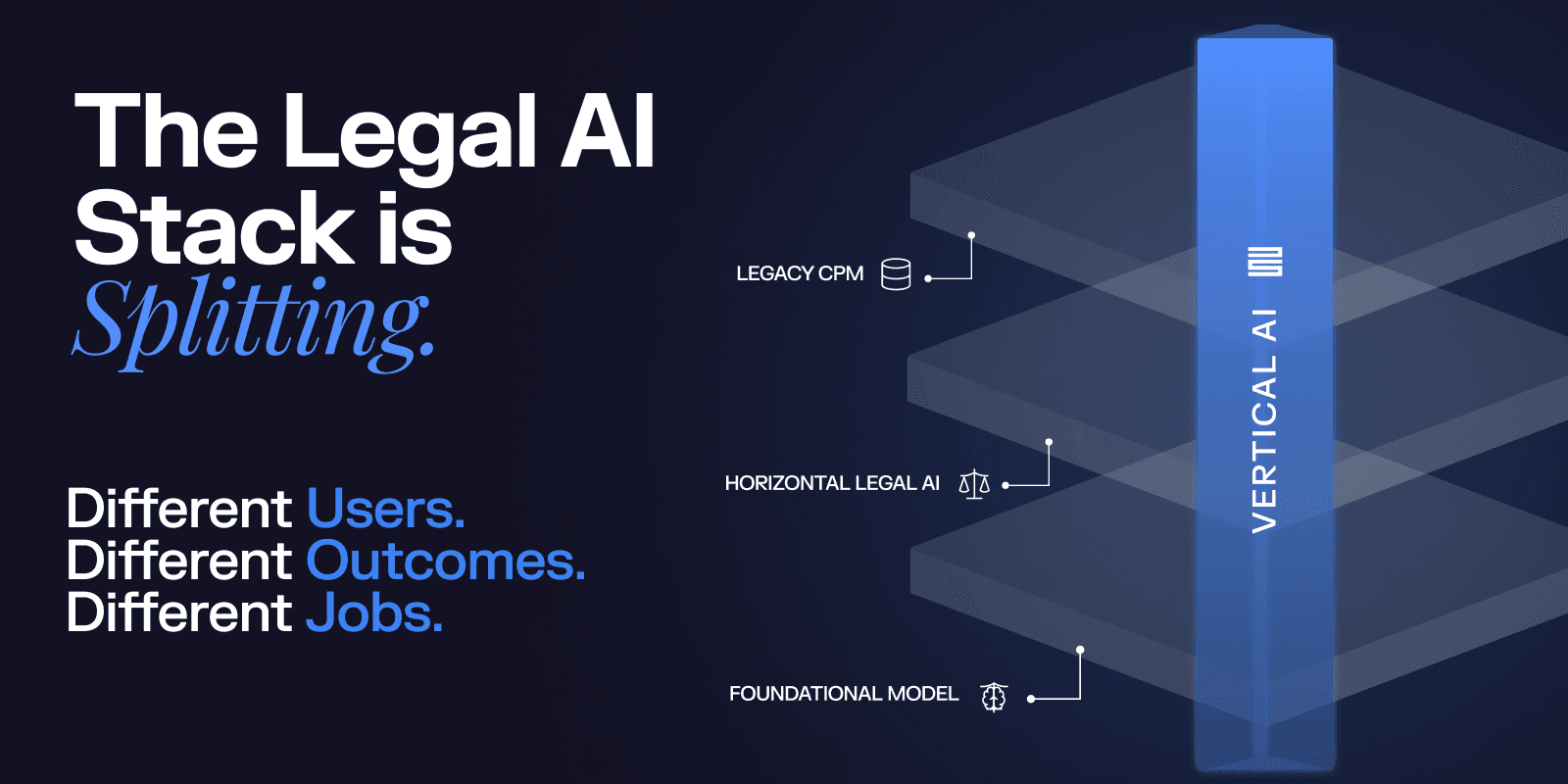
A document intelligence layer sits upstream of downstream workflows and helps turn fragmented records into a more complete, connected, and trustworthy governing chain.
It does not ask teams to throw out the systems they already use. It makes those systems smarter by improving the inputs behind them.
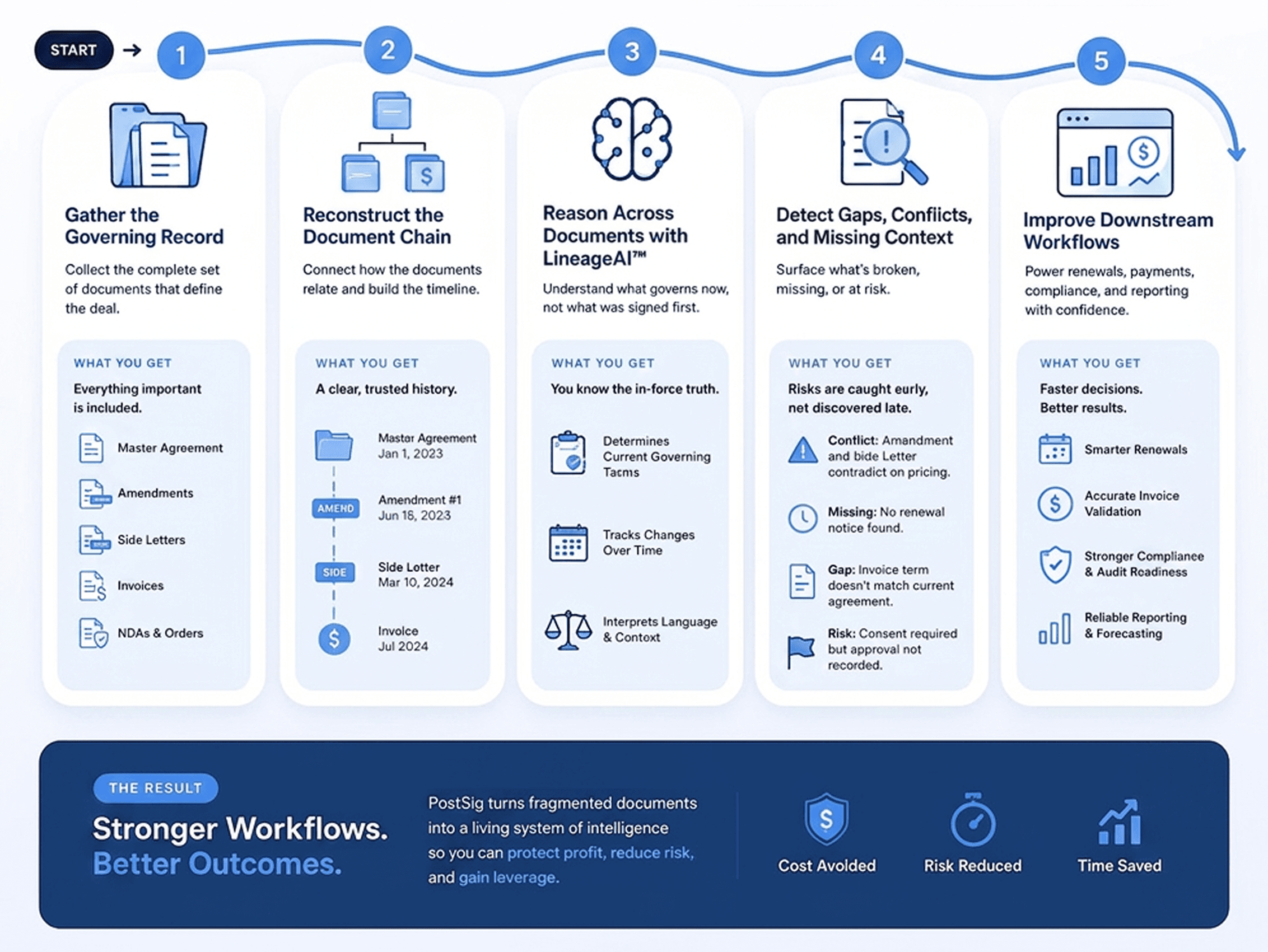
That starts with gathering the document set that actually governs the relationship.
In practice, those records rarely live in one clean place. They are spread across shared drives, email attachments, legacy folders, vendor correspondence, portals, and manually maintained internal files. Teams often believe they have “the contract” when they really have only one part of the story.
A document intelligence layer helps pull those materials together into a working governing record, rather than treating each uploaded file as an isolated artifact.
Why cross-document reasoning matters
From there, the next step is to reconstruct how those records relate to one another.
This is where AI has to do more than summarize text. It has to reason across documents. It has to connect the master agreement to the order forms, the amendments to the clauses they modify, the schedules to the commercial logic they control, and the invoices to the terms they are supposed to reflect. It has to understand sequence, references, overlap, and change over time.
That is why LineageAI™ matters.
It is not just extracting fields from one document at a time. It helps teams understand how related documents fit together and which terms are actually in force across the chain. This same capability is what powers AI-native access to cross-document intelligence across contracts, amendments, side letters, pricing schedules, and related records.
Where better AI creates real value
Once that chain is reconstructed, a better kind of AI value appears.
The system can start highlighting where the record likely breaks. An amendment references a prior amendment that is missing. A pricing schedule is referred to but never uploaded. An invoice reflects terms that do not appear anywhere in the visible documents. Dates suggest a gap in the chain. A local addendum exists, but nothing connects it back to the governing agreement it modifies.
This is not just a file management exercise. It is an intelligence problem.
And it is one of the clearest examples of how AI can complement existing workflows rather than replace them. The value is not in building a brand-new operational stack from scratch. The value is in making current systems more reliable by helping teams establish a governing record they can actually trust.
What improves downstream
When the governing record improves, downstream workflows improve with it.
Renewal tracking becomes more reliable because it reflects the terms that actually govern now, not just the terms that happened to be uploaded first. Invoice validation becomes more useful because it compares charges against the right pricing logic. Reporting improves because it is based on a fuller view of the agreement set.
Teams spend less time hunting through folders and more time making decisions with confidence.
That is the practical promise of AI in operations: not replacement, but reinforcement.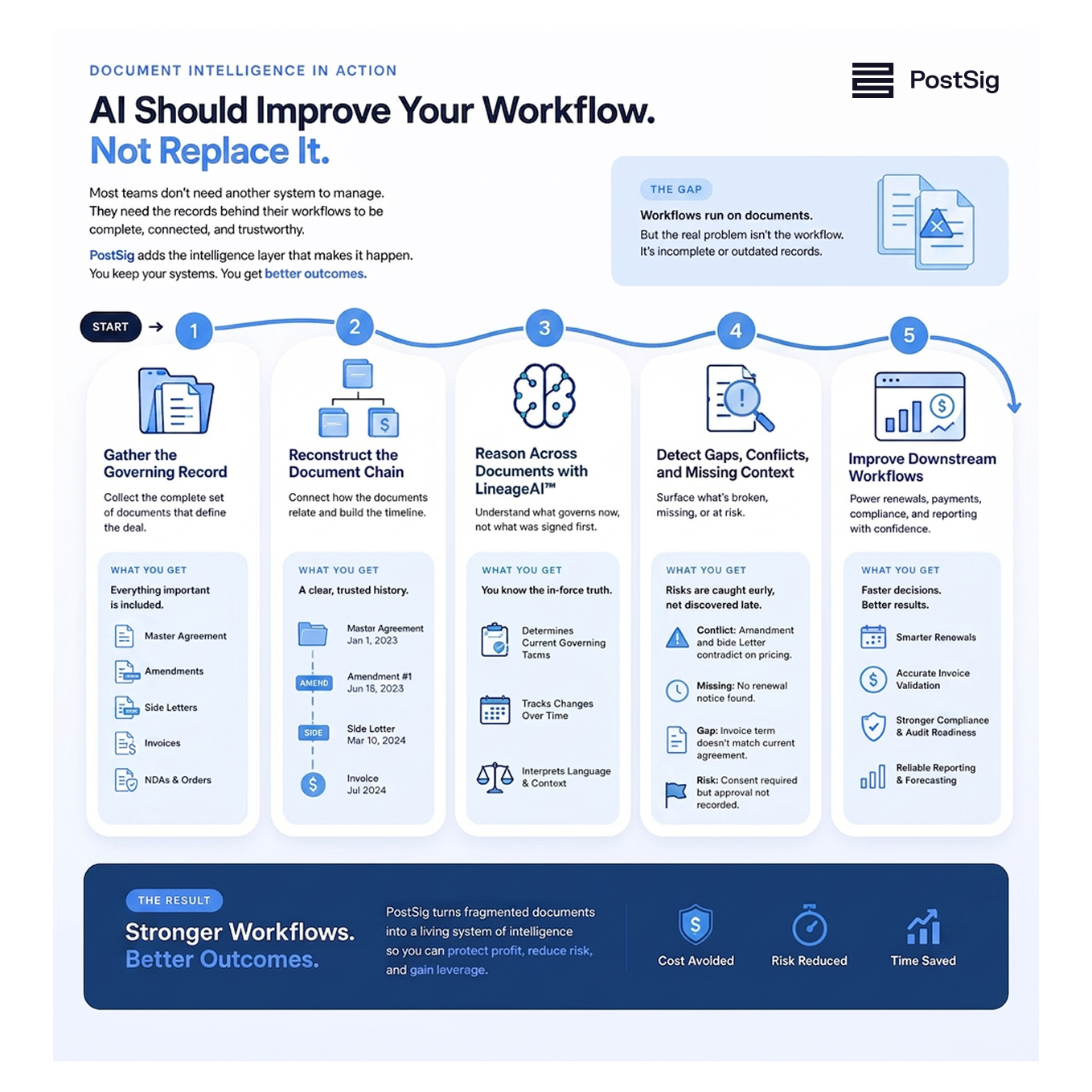
Why this is a lower-friction path to AI adoption
For most organizations, the fastest path to value is not replacing the systems they already rely on. It is augmenting them.
That is especially true in contract-heavy and document-driven environments, where teams already have established processes and tools but still struggle with fragmented records, stale context, and unreliable handoffs between documents and operations.
PostSig works alongside ERP, CRM, CLM, and other systems teams already use, helping them get more value from those workflows instead of forcing a rip-and-replace decision.
The bottom line
The real opportunity for AI is not simply to automate tasks. It is to improve the context behind the work.
In document-driven workflows, that means helping teams move from isolated files to connected records, from static storage to active understanding, and from false confidence to a clearer view of what actually governs the business.
AI should not replace the workflow.
It should make the workflow more trustworthy.
And for many teams, that is the missing layer: not another system, not another repository, and not another dashboard, but an AI-powered document intelligence layer that helps existing workflows work from a more complete, current, and connected governing record.