When a Board Seat Becomes a Governance Risk

Board seats are usually a sign of influence. They give a venture capital firm access, oversight, and a voice in critical decisions. They're often among the most valuable rights negotiated when an investment is made.
But the same portfolio connectivity that creates leverage can also increase risk.
On August 18, Axios reported that the U.S. Department of Justice (DOJ) is investigating Andreessen Horowitz over partners serving on the boards of Databricks and Fivetran. These two companies compete in some markets and partner in others. The DOJ has not confirmed or denied the investigation.
The story raises a larger operational question for venture firms:
Do you know where your board rights, board seats, and potential portfolio conflicts intersect today?
Not when the investment was made. Today.
Board rights rarely exist in isolation.
A board position can come from several places: a contractual right to appoint a director, a board observer right, Major Investor status, a side letter, protective provisions, or rights modified by a later financing.
Portfolio companies change, too. A startup that didn't compete with another portfolio company two years ago may compete with it now. Product lines expand. Partnerships turn into rivalries. Acquisitions redraw the map.
Section 8 of the Clayton Act generally bars an individual from serving as a director of two competing corporations, subject to statutory exceptions. The DOJ has also scrutinized cases where the same firm holds board seats through different partners, treating them as effectively the same interest.
The lesson isn't that every overlapping board relationship is a violation. It's that governance exposure can change after the deal closes. If the record of that exposure is static, a firm may not see the problem until someone else does.
Your portfolio is a lineage graph, not a list.
Most firms track governance one company at a time. Company A has its own financing documents. Company B has its own cap table. Board information lives in a spreadsheet, a portfolio system, a legal folder, or a partner's memory.
That works until a question spans more than one company. Where does the firm hold board or observer rights across the whole portfolio? Which rights changed after a later financing? Which two companies now compete?
Those questions are hard to answer because the documents that hold the answer aren't connected to one another. A firm can only see governance risk once its rights, entities, and companies are linked by their lineage, not just stored side by side. Connection is what turns a stack of documents into a lineage graph.
PostSig Investor Rights Intelligence™ makes board governance visible.
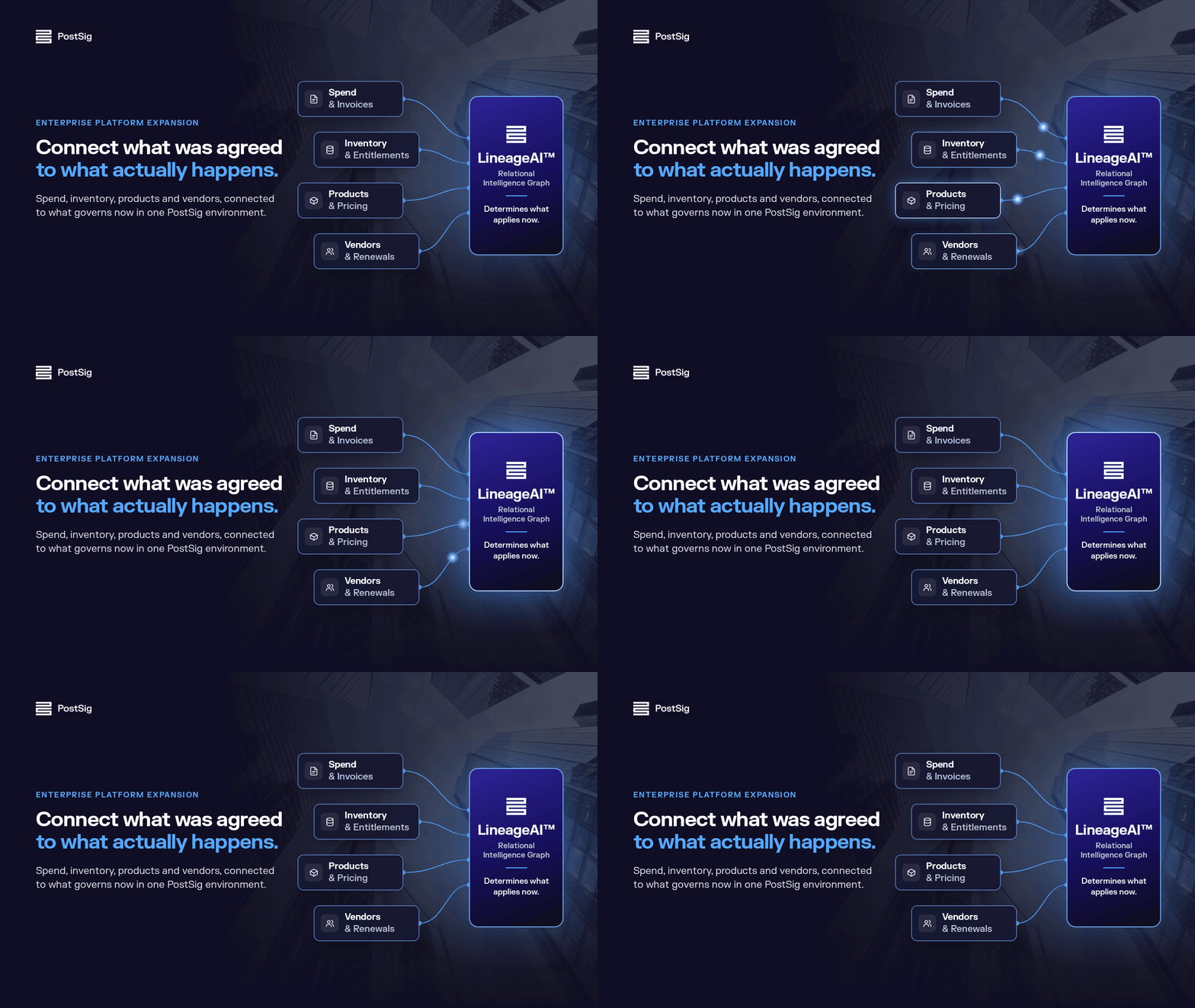
PostSig Investor Rights Intelligence (PostSig IRI™) builds that lineage graph. Powered by LineageAI™ (PostSig’s cross-document intelligence platform), PostSig IRI links investor rights agreements, side letters, amendments, board approvals, and financing events into a single, current lineage graph of who holds what right, over which company, and why, so firms can see which rights govern now and where they came from.
That includes board and observer rights.
View board exposure across the portfolio.
A firm can view where board and observer rights exist across every fund and company, instead of checking each one separately.
Connect the right to its source.
Knowing a board seat exists isn't enough. Teams need to know why it exists: an investor rights agreement, a side letter, a later financing, an ownership threshold. LineageAI keeps that path current as documents change.
Know when a right changes.
Board and observer rights shift with new rounds, amendments, waivers, and restatements. IRI tracks what was added, modified, waived, or superseded, and what's still active.
From board-seat inventory to governance intelligence
The answer isn't to stop taking board seats. Board participation is central to how venture firms support portfolio companies and exercise the rights they negotiated.
The real question is simpler: how does a firm know what it holds, across every fund and company, and know the moment that changes?
A spreadsheet tells you what someone recorded. A document repository tells you where the agreements are. A cap table tells you who owns what. None of them is a lineage graph, and none of them tell you whether two of your board seats now sit on opposite sides of the same market.
PostSig IRI helps venture firms close that gap. It connects rights, entities, companies, documents, and changes into one current lineage graph, giving legal, compliance, and investment teams the evidence to evaluate a potential conflict before it becomes a headline, not after.
That doesn't replace legal judgment. It gives legal teams somewhere to start.
The Andreessen Horowitz story may or may not change how Section 8 applies to venture capital. But it already makes one thing clear: as portfolios grow and companies overlap more, governance can't be managed as a set of static facts. It has to be managed as a lineage graph. The question isn't where a firm has board seats. It's where a firm has governance rights today, what's changed, and where those relationships now deserve a second look.
Don't guess who has a seat at the table. Know what governs it.
Disclaimer: PostSig provides technology for organizing and understanding investor rights, portfolio, and governance information. It does not provide legal advice or determine whether a particular board relationship violates antitrust law.