The Next Problem After the Golden Age of Building: Dashboard Overload

Originally published on LinkedIn March 18, 2026
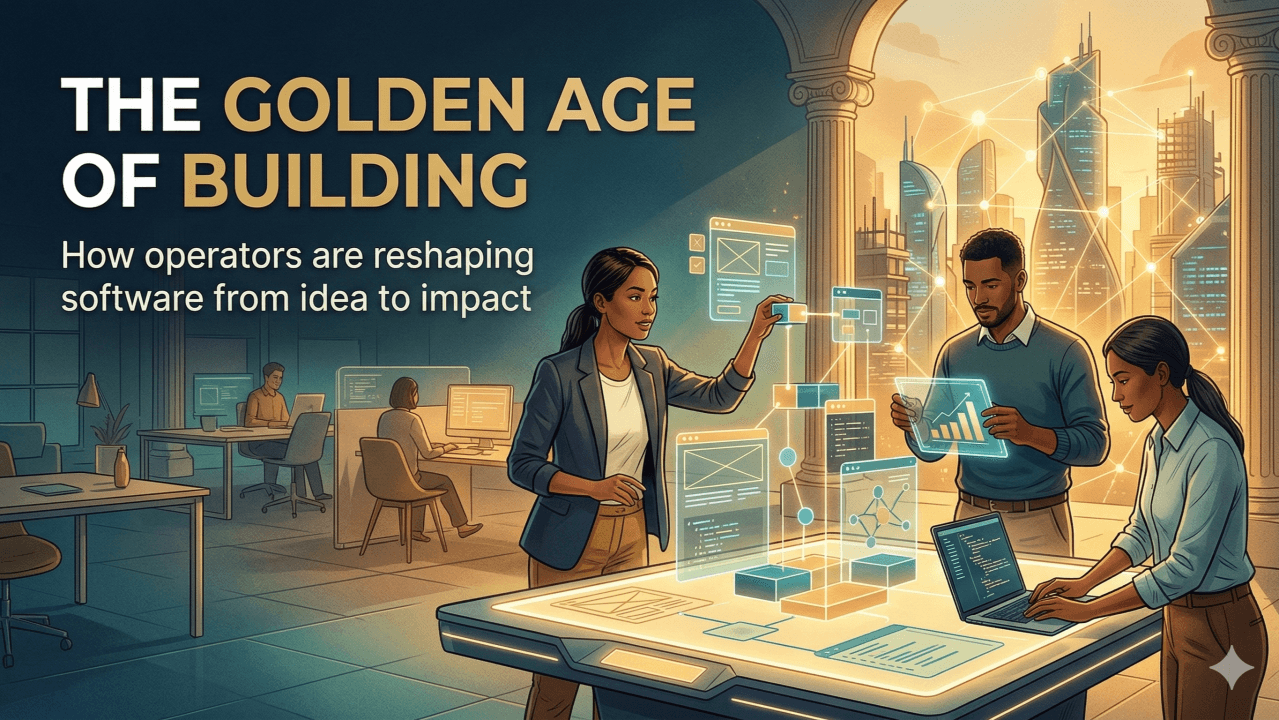
Last week, I wrote that we are living in a golden age of building.
I believe that strongly.
The distance between idea and validation has collapsed. Product teams move faster. Founders can prototype faster. Operators can now build the first version of a real workflow themselves, often without waiting months for engineering resources.
That is not just a feeling.
Menlo Ventures’ 2025 enterprise AI report described AI coding agents and AI app builders as breakout categories, with code agents and app builders growing from near-zero and teams reporting meaningful velocity gains. Gartner, meanwhile, forecast worldwide generative AI spending would reach $644 billion in 2025, up 76.4% year over year.
To me, it is one of the most exciting things happening in software right now.
But it is also creating a second-order problem.
The rise of dashboard overload
As more teams build their own internal systems, sales cockpits, CRM overlays, RevOps layers, reporting environments, and workflow-specific control planes, we are also creating more interfaces, more views, and more dashboards.
In many organizations, every function now has its own operating surface. Then come the weekly reports, the decks built from those dashboards, and the spreadsheets that still exist because nobody fully trusts a single system.
So while this may be the golden age of building, it also increasingly feels like the age of dashboard overload.
The data supports this direction of travel.
The CRM market alone remains massive and fragmented. Salesforce, still the market leader, held 20.7% global CRM share in 2024. That is a dominant position, but it also means nearly four-fifths of the market sits elsewhere, spread across a wide range of vendors, custom layers, and point solutions.
If the cost of building software keeps falling, the number of software surfaces inside an organization will keep rising.
And if every problem gets its own dashboard, the user experience of the enterprise may actually get worse before it gets better.
The real bottleneck is not data, it is interpretation
We have spent years getting better at instrumenting the business.
We are very good now at collecting data, tagging objects, surfacing metrics, and visualizing performance. But many systems still leave the user with the same final burden:
- Interpret the dashboard
- Reconcile it with other dashboards
- Decide what matters
- Figure out what to do next
That is where the conversation gets more interesting.
The question is no longer whether we can build more software.
The question is whether we can build software that asks less of the user.
Are we moving beyond dashboards?
I think we are.
Not because dashboards disappear entirely, but because they stop being the primary interface.
Boards will still want standard reporting. Executives will still need persistent views. Teams will still want recurring summaries for recurring workflows. Dashboards are not going away.
But the center of gravity is shifting.
From fixed interfaces to dynamic, language-first ones.
You can already see this shift happening:
- Microsoft is pushing Copilot for Power BI as a natural language interface for querying data, while phasing out legacy Q&A experiences
- ThoughtSpot positions itself around agentic analytics and instant insight generation
- Salesforce is introducing Agentforce and the broader concept of the “Agentic Enterprise.”
These are not edge cases anymore.
They are signals that the interface model itself is changing.
From navigation to intent
Most people do not wake up wanting another dashboard.
They want answers.
They want to ask:
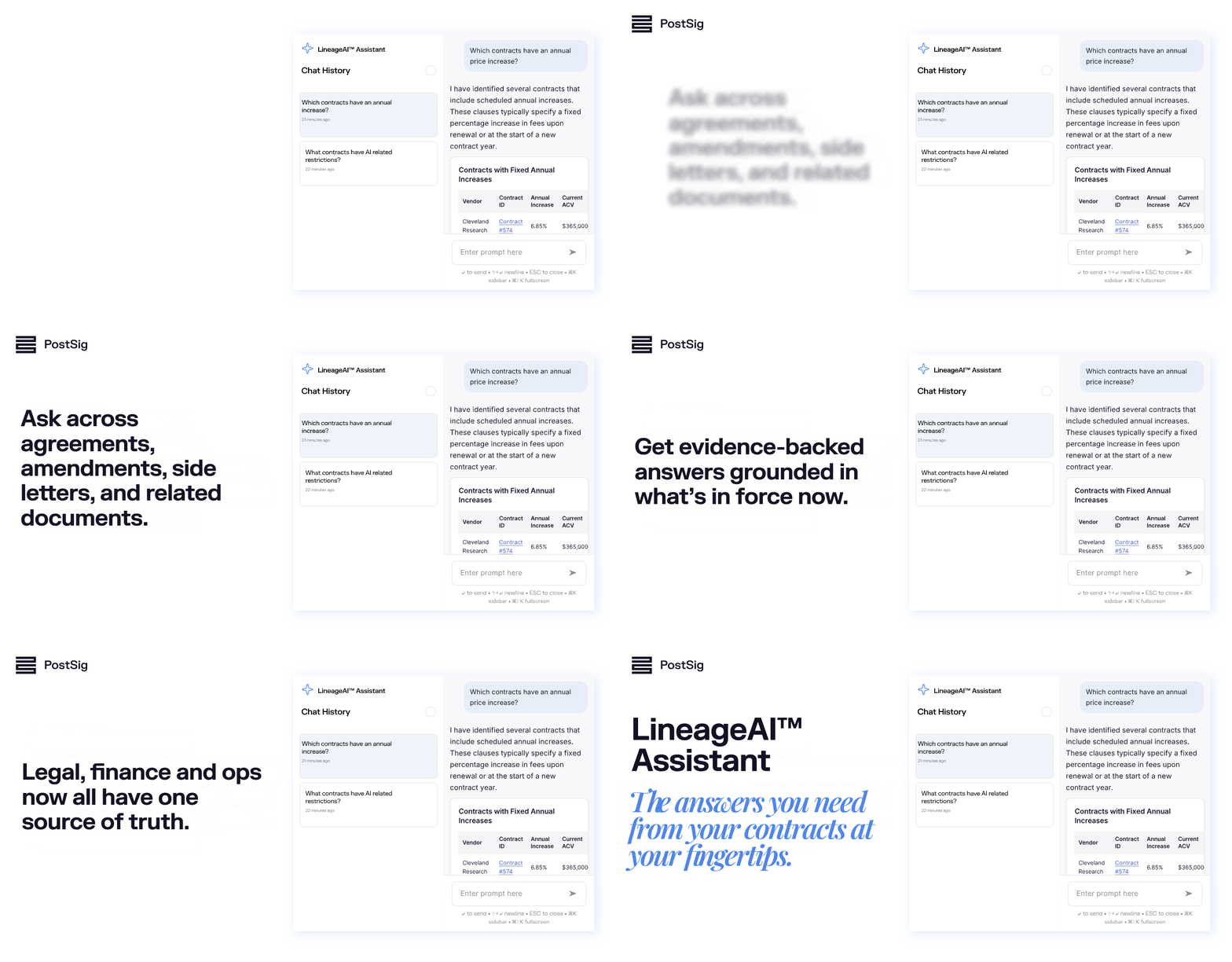
- Which renewals need my attention right now?
- Where are we over-licensed?
- Which opportunities are actually at risk?
- What changed this week that I should care about?
- Where is spend drifting away from what we thought we had contracted?
That is a fundamentally different interaction model.
Instead of navigating toward insight, the user starts with intent.
The system then has to assemble the right context, apply permissions, understand the relevant business objects, and return not just data, but meaning.
Why this shift matters
This is not just a UX improvement.
It changes decision quality.
A 2024 experimental study on dashboard visualization showed that the format, currency, and completeness of information improve decision-making by reducing perceived complexity and increasing information satisfaction.
In other words, interface design is not cosmetic.
It directly impacts how well people make decisions.
Where the next generation will win
The winners in this next phase will not simply be the companies that build more screens faster.
They will be the companies that build better underlying models of the business.
Systems that actually understand:
- customers
- contracts
- invoices
- opportunities
- approvals
- rights and obligations
Once that structure is understood, the interface becomes flexible.
A dashboard becomes one possible output, not the only one.
The hard part most people underestimate
This is where a lot of AI product thinking still falls short.
It is relatively easy today to put a general-purpose model on top of a pile of records and call it an assistant.
It is much harder to build a system that can:
- reason within a domain
- stay grounded in governed data
- respect permissions
- produce outputs that support real decisions
The more serious the use case, the more this distinction matters.
Where this leads
So yes, we are living through the golden age of building.
But the next challenge is not simply building more software.
It is building software that reduces interface burden rather than increasing it.
Software that lets users interact with the business in plain language.
Software that can generate the right view when needed, instead of forcing users to navigate through static ones.
Software where the dashboard becomes an output, not the starting point.
That, to me, is the more interesting future.
Not no dashboards.
But also not more dashboards.
Fewer permanent dashboards.
Fewer navigation layers.
Fewer static views.
And more systems that begin where real work begins: with a question.
Continue reading
This is a condensed version of the original piece.
For the full version, including additional context and examples:
👉 https://www.linkedin.com/pulse/next-problem-after-golden-age-building-dashboard-overload-bartel-yzsvc/?trackingId=jTs9xxUQ7SfCyonMwpB0VA%3D%3D