AI Is Eating Venture Capital. But Who’s Tracking the Investor Rights?
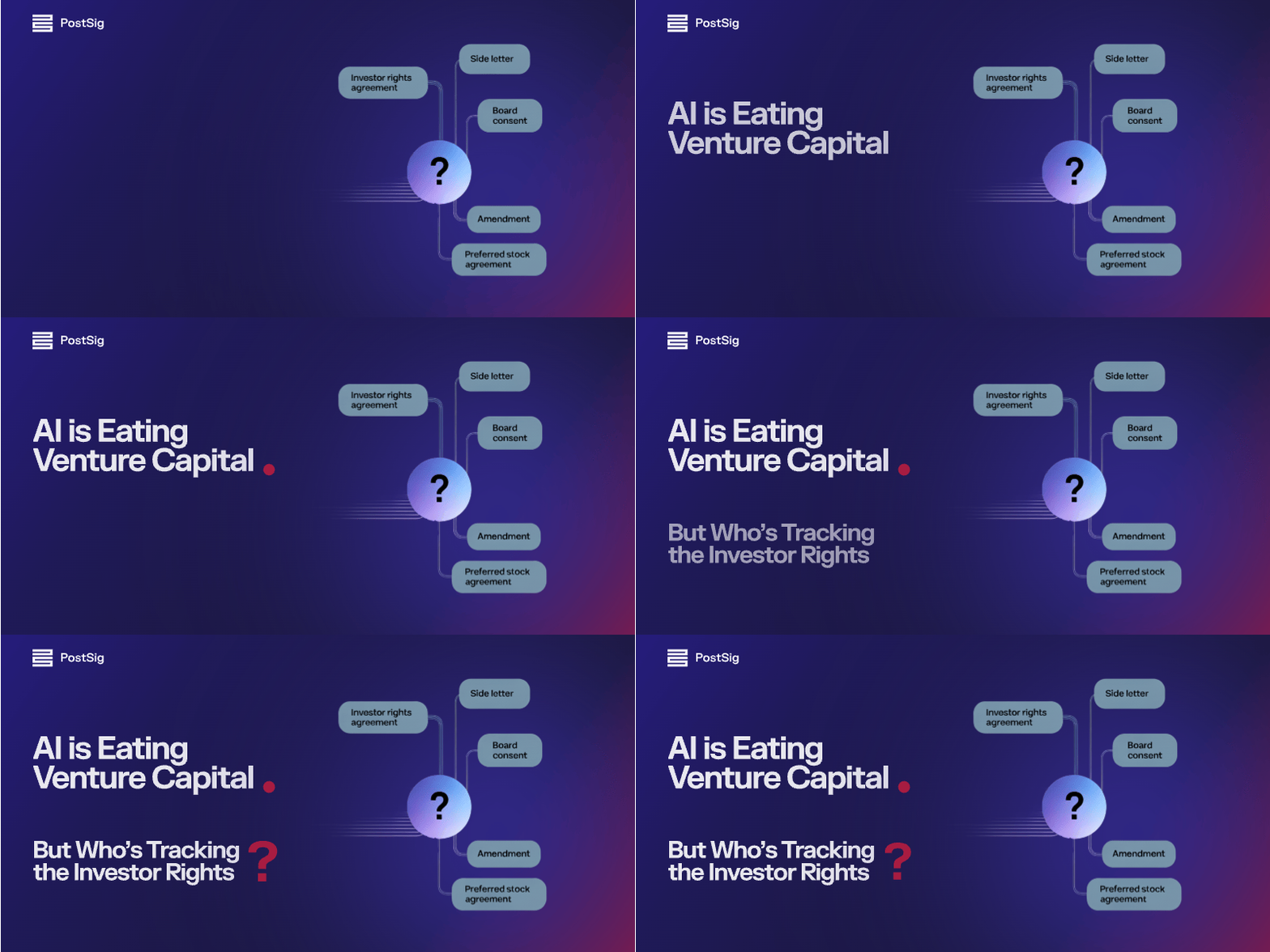
AI is transforming venture capital—but the systems that track investor rights are still buried in documents.
AI has taken over venture capital. But the infrastructure investors use to manage their rights hasn’t changed in decades.
According to the PitchBook NVCA Venture Monitor, 65.4% of deal value in 2025 went to AI companies.
Infrastructure models. Data platforms. Vertical AI startups.
Capital is concentrating quickly. In fact, 50% of venture deal value in 2025 came from just 0.05% of deals, according to the same PitchBook report.
When that much value sits in a handful of companies, governance matters more than ever.
But there’s a quiet operational problem inside venture firms that almost no one talks about.
The faster portfolios grow, the harder it becomes to track the rights investors actually own.
Venture Capital Runs on Documents
Every venture investment creates a web of governance documents:
- Investor Rights Agreements
- Preferred Stock Agreements
- Board consent provisions
- Pro-rata participation rights
- Information rights
These agreements define the actual control investors have over their portfolio companies.
But once a deal closes, most of these documents disappear into shared drives or document storage systems.
Stored.
Filed.
Forgotten.
Until something important happens.
A new financing.
A board vote.
A follow-on opportunity.
That’s when firms suddenly need to know:
What rights do we actually have here?
Governance Doesn’t Live in One Document
Investor rights rarely stay static.
As companies raise new rounds, governance evolves across multiple documents:
- Amended investor rights agreements
- New preferred stock agreements
- Side letters
- Updated consent provisions
- Board approvals
Each new financing changes the picture.
To understand what rights actually apply today, investors often have to manually reconstruct the history of the deal.
Which document governs?
Which amendment changed the terms?
Which rights still apply after the last round?
The information exists, but it’s fragmented across documents and time.
The Real Problem: Reconstructing Context
Most venture infrastructure solves these two things well:
Cap table software → ownership
Document storage → agreements
But neither system understands how those agreements connect.
And that’s where the real governance risk lives.
The problem usually surfaces at the worst possible moment — right before a financing, board vote, or follow-on decision.
Across a portfolio of dozens (or hundreds) of companies — often spread across multiple funds and stages, firms suddenly need answers to questions like:
- Do we have approval rights on this financing?
- Where do we have pro-rata rights in the next round?
- Which companies owe us reporting this quarter?
- Which board actions require investor consent?
The answers are buried in documents — and scattered across versions.
So every time a decision arises, someone has to dig through agreements, amendments, and side letters to reconstruct the answer.
The Missing Layer: Investor Rights Intelligence
For decades, venture firms have built their operating stack around two systems:
cap tables to track ownership and shared drives to store documents.
But ownership and documents don’t actually run the portfolio.
Rights do. And those rights change every time a company raises another round.
Investor approvals.
Board consent thresholds.
Pro-rata participation.
Information rights.
As portfolios scale and governance evolves across financing rounds, firms increasingly need a system that continuously understands these rights across the entire portfolio.
In effect, this becomes a new operating layer for venture capital — an intelligence layer that sits above cap tables and document storage to interpret the agreements that actually govern decisions.
This is the gap PostSig Investor Rights Intelligence™ (PostSig IRI™) is designed to solve.
Instead of simply storing governance documents, PostSig IRI interprets them and connects them across time.
Powered by LineageAI™, its AI engine, PostSig traces the relationships between agreements:
Original investment → amendments → new financings → updated rights
That lineage creates a continuously current view of governance.
Instead of manually reconstructing context, venture firms can see:
- Which rights are currently in force
- When approvals or consents are required
- Where pro-rata rights exist across rounds
- How governance has evolved across the portfolio
Governance stops being a static archive of PDFs.
It becomes a living system of intelligence.
The Bottom Line
AI is transforming the companies venture firms invest in.
But it’s also exposing how outdated venture infrastructure really is.
The next generation of venture tools won’t just track ownership.
They’ll track rights and the document lineage that defines them.
Because in venture capital, the most valuable thing you own isn’t always the shares.
Sometimes it’s the rights buried in the agreements — and whether you can actually see them in time.
And those rights only matter if you can see how they evolve over time.